PUBLIC ADVISORY: FAKE NEWS ALERT ON SHAMIMA ALI AND FWCC
7 May, 2026
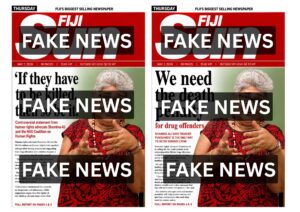
The Fiji Women’s Crisis Centre (FWCC) is advising members of the public to exercise caution regarding fabricated news stories and fake newspaper pages currently circulating online using the mastheads and branding of legitimate media organisations, including The Fiji Times and Fiji Sun.
FWCC is aware of multiple fake stories currently being circulated online, including a fabricated story falsely attributing statements to FWCC Coordinator Shamima Ali regarding the death penalty. This is a fake news story.
FWCC wishes to make it absolutely clear that, as a human rights organisation grounded in principles of justice, dignity and the rule of law, FWCC does not and will never advocate for the death penalty.
Any attempt to falsely associate FWCC or its Coordinator with support for the death penalty is entirely misleading and contrary to the organisation’s long-standing human rights principles and advocacy.
FWCC understands that some of the content is being circulated through a social media account identifying itself as “Richard Prasad Apted”. FWCC is also aware that prominent journalists, as well as musicians and other public figures, have reportedly been targeted through separate online accounts circulating similar fabricated and misleading content.
What is deeply concerning is the apparent pattern emerging through the use of fake newspaper layouts, impersonation tactics and coordinated online harassment targeting individuals across media, civil society and the wider community.
FWCC believes Fiji urgently needs a national conversation and a coordinated response to the growing spread of online disinformation, impersonation, digital harassment, and technology-facilitated violence against women and girls, particularly as the country approaches future elections and as important national conversations continue to unfold.
Disinformation campaigns have the potential to inflame tensions, distort public understanding and undermine trust in democratic institutions, media organisations and civil society voices.
Ends