Fiji Women’s Crisis Centre Completes Intensive Training on Gender, Human Rights, and Violence against Women with Republic of Fiji Military Forces Gender Focal Points
22 Mar, 2026
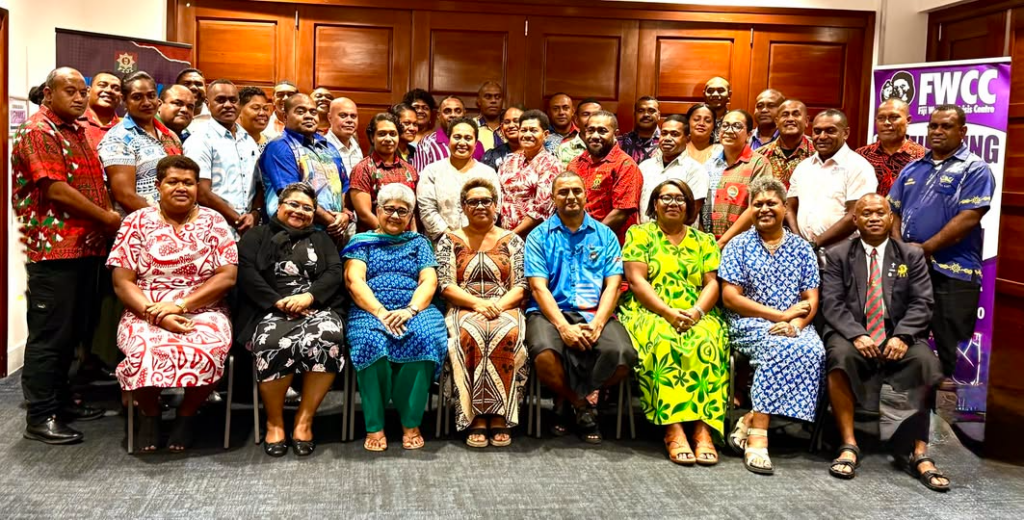
Thirty-five men and women who are Gender Focal Points from the Republic of Fiji Military Forces (RFMF) have completed a week-long intensive training facilitated by the Fiji Women’s Crisis Centre (FWCC), focused on gender, human rights, violence against women and girls, and basic counselling ethics.
The training, held at Tanoa Plaza Hotel in Suva from March 16–20, brought together RFMF personnel tasked with advancing gender awareness and strengthening institutional responses to violence against women within their respective units.
Participants engaged in in-depth sessions on gender dynamics, the root cause and impacts of violence against women and girls, and the critical role institutions play in prevention and response.
The programme also addressed emerging issues such as technology-facilitated violence against women and girls and violence in emergency settings, alongside Fiji’s law relating to domestic violence and sexual offences.
This training forms part of broader national efforts under Fiji’s National Action Plan to Prevent Violence against All Women and Girls, which calls for strengthened institutional capacity, coordinated responses, and increased accountability across sectors.
FWCC Coordinator Shamima Ali acknowledged the commitment of the RFMF in supporting efforts to eliminate violence against women and girls and strengthen gender equality within its ranks.
“Violence against women and girls is a serious human rights violation that affects not only individuals and families, but the broader community and national development. Institutions like the RFMF play a critical role in shaping attitudes, responding appropriately to cases, and promoting zero tolerance for violence,” said Ali.
She emphasized that understanding gender and violence against women is essential for those in positions of responsibility.
“It is critical that members of the RFMF understand the dynamics of violence against women and girls and respond in ways that prioritize the safety, dignity, and rights of survivors. Applying basic counselling ethics — including confidentiality and a ‘do no harm’ approach is fundamental in any engagement with survivors.”
RFMF Gender Advisor Lavenia Raisua said the training was a significant step forward in strengthening the institution’s response to violence against women and girls.
“The RFMF is grateful to the Fiji Women’s Crisis Centre for its technical expertise and for supporting the funding of this training. The programme was highly participatory and structured to ensure a firm understanding of the issues, strengthening our capacity as Gender Focal Points to respond to violence against women and girls in a more informed, ethical, and survivor-centered manner, while also promoting gender equality across all areas of our work,” said Raisua.
The training also included sessions on referral pathways and the importance of coordinated, survivor-centered responses across institutions.
Participants reflected on their role as agents of change within the RFMF, emphasizing the need for continued awareness, accountability, and leadership in addressing violence against women and gender inequality.
FWCC acknowledges its major donor and one of its long-term development partners, DFAT, for its support.
Ends